Roof condition
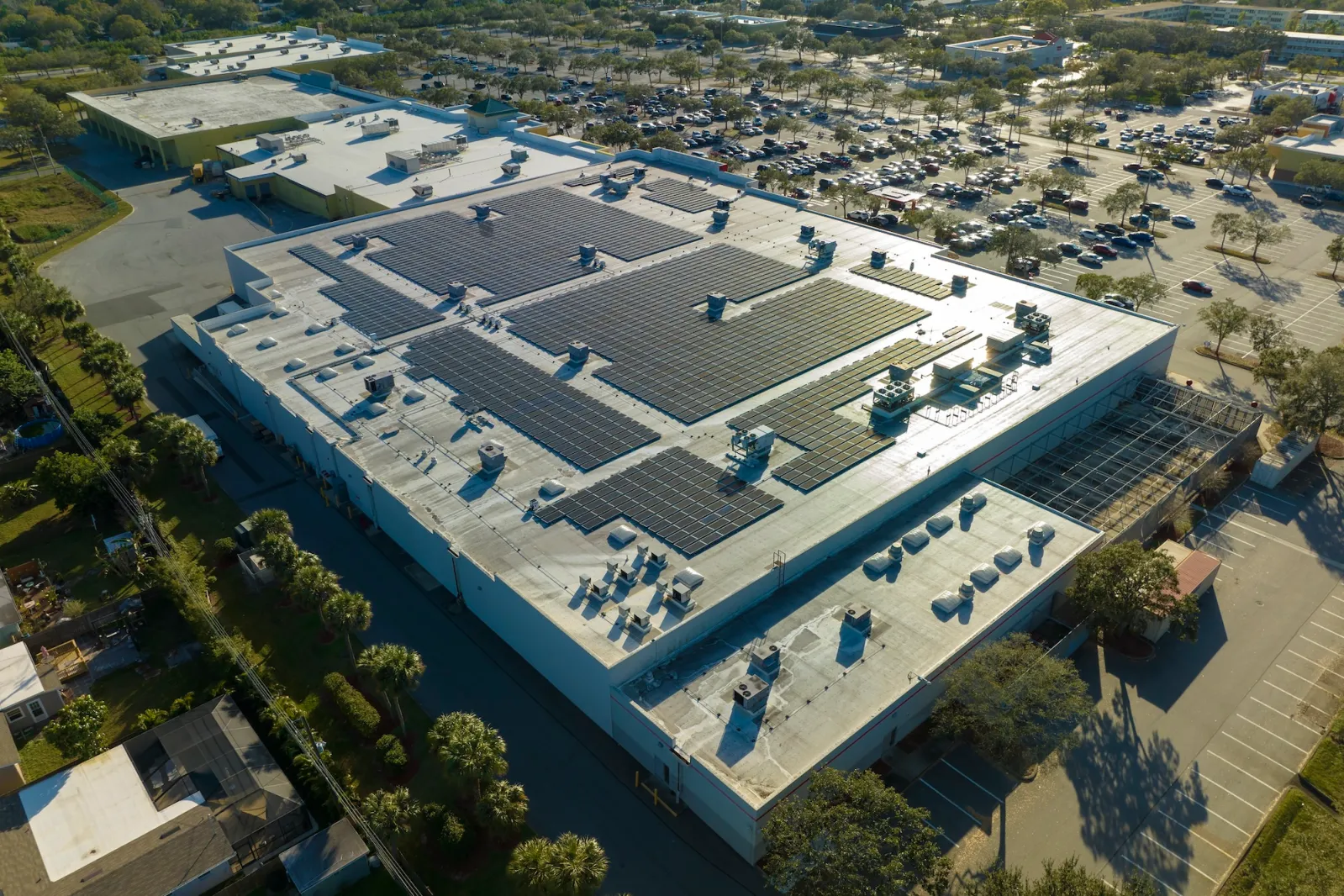
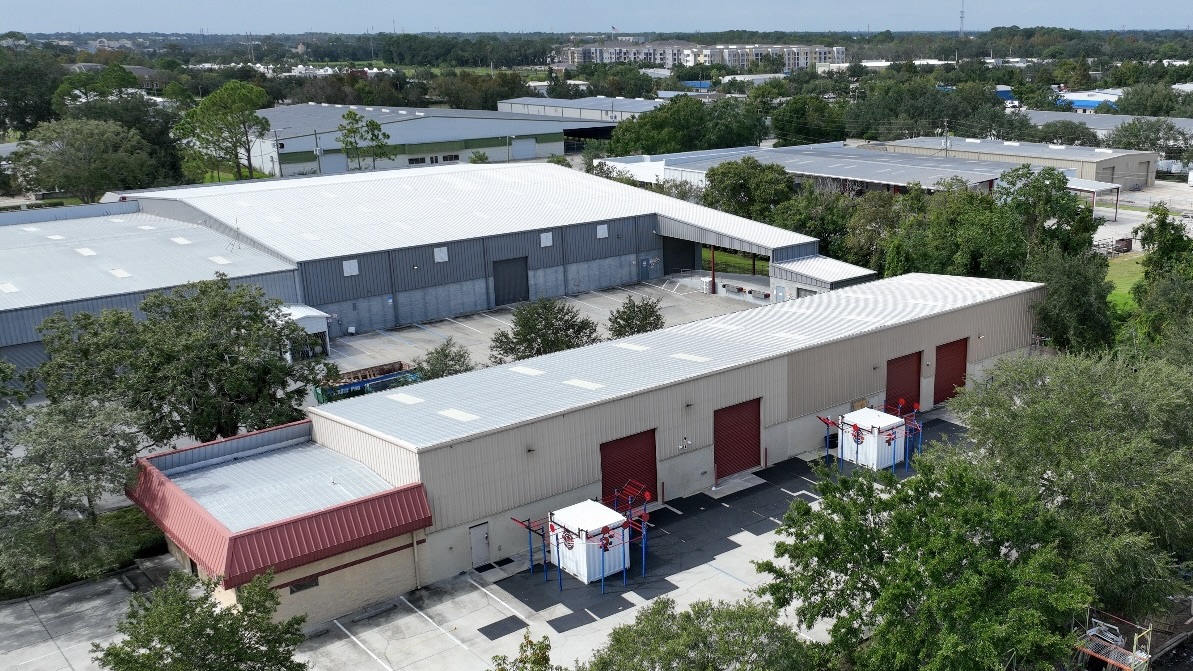
Membrane seams, fasteners, curbs, penetrations, edge metal, and drainage paths are reviewed before any repair scope is recommended.
 Request Roof Walk
Commercial Roofers of Huntsville handles aerospace & defense facility roofing with a documented roof walk, photo notes, repair priorities, and a clear path for maintenance, recovery, or replacement.
Commercial roofing for aerospace and defense facilities in Huntsville, AL operates under a different set of constraints than standard commercial work. Facilities tied to active weapons programs, aircraft production, national laboratories, or military installations carry access control requirements, security clearance protocols for onsite supervisors, and coordination with facility security officers before a single material lift is scheduled. Our crews understand that requirement, and we build it into every bid, schedule, and site plan.
Major Aerospace and Defense Facilities in the Huntsville Area
Huntsville's aerospace campus, the densest concentration of rocket and missile engineering outside of the Washington DC beltway, encompasses NASA test stands, Army missile labs, and Boeing/Northrop facilities all requiring specialized industrial roofing across a wide range of structure types.
The roofing systems on aerospace and defense structures carry stakes beyond weather protection. A failure over an active manufacturing floor, whether that means a fighter jet assembly line, a missile guidance lab, or a satellite integration cleanroom, can trigger production shutdowns, contaminate precision components, or compromise facility certifications. The zero-tolerance standard these clients apply to their primary mission is the same standard we apply to the roof above it.
Our defense and aerospace roofing work includes planned replacement, emergency roof repair under time-critical operational constraints, and new construction roofing for facility expansions. We carry the insurance coverage, bonding capacity, and documented quality procedures that federal facility managers and prime contractor subcontract teams require. When a facility expansion schedule is tied to a DOD delivery milestone, "we'll get to it" is not a close-out answer, we staff to the schedule and document every phase.
Yes. We work with facility security officers to complete the necessary base access credentialing for our crew members. Lead time for clearance varies by installation, we factor it into the project schedule upfront rather than discovering it during mobilization.
We provide full prevailing wage certified payroll (if applicable), material submittals for spec compliance, daily logs, third-party inspection coordination, LEED or sustainability documentation if required, and a final warranty package formatted for federal facility records systems.
We develop a phased work plan with the facility manager and base operations officer, sectioning the roof into work zones, maintaining dry-in protection on any open sections, and scheduling loud or disruptive work during approved windows. Our pre-construction checklist includes noise, vibration, dust, and chemical exposure considerations for every zone adjacent to active operations.
We work on the building envelope, roofs, walls, and flashings, which in most cases does not require classified access. For facilities where roof access itself requires a clearance, we identify that requirement early and work with the government contracting officer to plan accordingly.
TPO and PVC membrane systems are most common for new and re-roofing work due to their resistance to chemical splash and UV degradation. Standing seam metal is preferred on high-bay structures where long-term performance and minimal maintenance are prioritized. We always match the system to the specific exposure, a satellite integration cleanroom has different requirements than a motor pool.
Huntsville, Alabama is home to one of the most concentrated and strategically significant defense and aerospace computing ecosystems in the United States. Redstone Arsenal hosts a collection of US Army computing and communications infrastructure that includes the Army's primary missile and aviation command systems, the Aviation and Missile Command (AMCOM), and the Missile Defense Agency's computational infrastructure. NASA's Marshall Space Flight Center, also on Redstone, operates some of the most intensive scientific computing resources in the federal government, supporting launch vehicle development, propulsion research, and the aerospace engineering programs that have defined Huntsville's identity for decades. The defense contractor ecosystem that surrounds these federal anchors, including Boeing, Lockheed Martin, Dynetics, and dozens of smaller firms, adds a substantial private-sector layer of sensitive computing infrastructure. Commercial roofing contractors serving Huntsville's data center market must understand both the physical demands of Alabama's climate and the security and compliance requirements of working adjacent to or within federal defense facilities.
Redstone Arsenal's computing infrastructure includes both the federal government's own systems and the significant IT operations of the many defense contractors who lease space on the installation. This mix of government and contractor computing creates a diverse set of roofing requirements, from the hardened specifications appropriate for mission-critical military computing to the standard commercial specifications of contractor office and laboratory buildings. Contractors who achieve Redstone Arsenal access, requiring security clearances, base access credentials, and compliance with the installation's contractor safety and operations requirements, gain access to a large, sustained market for facility maintenance and capital improvement work on computing infrastructure that won't be relocated or consolidated in the foreseeable future.
NASA Marshall Space Flight Center's data center infrastructure supports one of the most computationally demanding research environments in the US government. Rocket propulsion modeling, launch vehicle structural analysis, and the simulation systems that support the Space Launch System and Artemis programs require high-performance computing at a scale that imposes significant mechanical loads on the roofs of the buildings housing that infrastructure. NASA facilities carry their own set of design, documentation, and contractor qualification requirements, NASA's facilities standards overlay the general federal facility requirements with agency-specific provisions, and contractors seeking to work on Marshall's data center buildings should plan for a longer qualification and procurement process than standard commercial work requires.
Alabama's climate creates a specific set of demands for Huntsville data center roofing that differs from both the Deep South Gulf Coast environment and the more temperate conditions of the upper South. Huntsville receives significant annual rainfall, experiences hot and humid summers with persistent high dew points, and is subject to severe weather including tornadoes, the Tennessee Valley is in a high-tornado-frequency zone. Winter weather includes periodic ice storms from freezing rain events that can load rooftop systems and stress membrane details. The combination of high summer humidity, tornado risk, and winter ice storm exposure creates a demanding multi-season performance requirement for data center roofing systems in Huntsville. FM-rated roofing assemblies with verified wind uplift ratings are the appropriate baseline specification for this market.
Tornado exposure is a non-trivial consideration for Huntsville data center roofing design. The April 27, 2011 tornado outbreak, one of the most destructive in US history, caused widespread damage across northern Alabama including in the Huntsville metro area. The lessons from that event, and from subsequent Alabama tornado events, have shaped how serious facility owners in this region think about building envelope resilience. While no roofing system provides absolute protection against a direct tornado hit, properly designed and installed FM-rated assemblies with robust edge metal and perimeter fastening significantly outperform minimum-code-compliant systems in the high-wind and projectile-impact events that accompany tornado activity. Data center operators in Huntsville who have lived through severe weather events are typically among the most motivated buyers of premium roofing specifications.
The vapor management requirements for Huntsville data centers reflect Alabama's summer humidity profile. The Tennessee Valley's summer produces dew points consistently above 70°F from June through September, creating strong inward vapor drive toward cooled data center interiors. The defense and aerospace IT facilities that anchor Huntsville's data center market often maintain very precise interior humidity setpoints to protect sensitive computing hardware, which increases the vapor pressure differential across the roofing assembly and heightens the importance of continuous, properly executed vapor retarder installation. Any penetration, seam, or transition in the vapor retarder layer that allows moisture to bypass it will manifest as insulation degradation and eventually as deck corrosion if not addressed. Contractors who execute vapor retarder installation with the same attention to detail they give to the primary membrane consistently deliver better long-term roofing performance in this climate.
Huntsville's aerospace and defense contractor ecosystem creates an interesting private-sector data center market alongside the federal facilities. Companies like Boeing, Lockheed Martin, and the network of smaller engineering firms that support Redstone and Marshall have their own secure computing needs, and many operate private data centers in leased or owned facilities around the Huntsville metro area. These private contractor facilities don't require the formal federal procurement process that government buildings do, but they often apply specifications and quality standards shaped by the companies' federal contract work. Defense contractors are accustomed to detailed documentation requirements, and many bring that documentation culture to their private facility maintenance and improvement projects, a characteristic that favors roofing contractors who can provide thorough installation documentation, material certifications, and quality inspection records.
The continued growth of Huntsville's defense and aerospace sectors positions the city's data center roofing market for sustained expansion. The US Army's ongoing investment in Redstone Arsenal facilities, NASA's Artemis program requirements, and the Department of Defense's increasing reliance on digital systems for military operations all drive continued data center construction and renovation in the Huntsville area. For commercial roofing contractors willing to invest in the security access requirements and documentation standards of the defense sector, Huntsville offers a market where long-term facility relationships, premium specifications, and stable federal procurement budgets create conditions for sustained high-value work. Building those relationships and qualifications before specific projects arise is the key to capturing this opportunity.
Membrane seams, fasteners, curbs, penetrations, edge metal, and drainage paths are reviewed before any repair scope is recommended.
Work windows, tenant access, equipment protection, and safety needs are considered so roof work fits the building’s operating rhythm.
Photos, notes, measurements, and priorities are organized into a roof plan that helps ownership choose the next move with less guesswork.