Roof condition
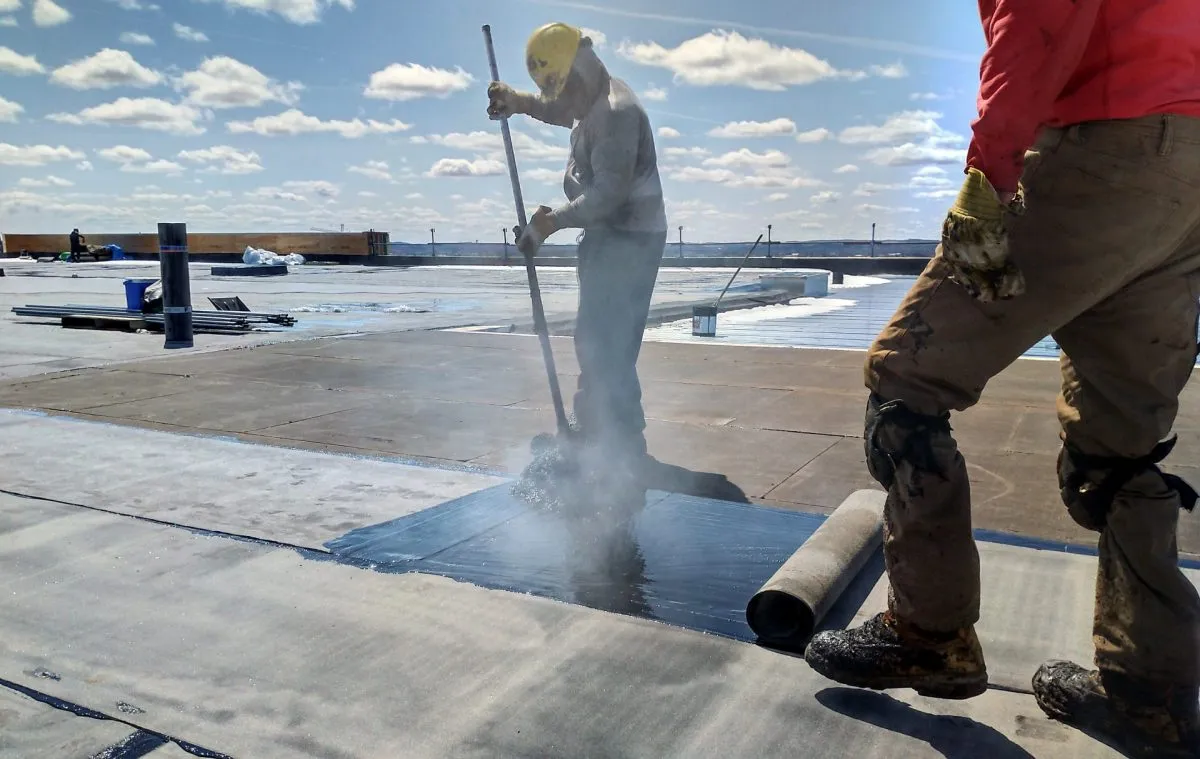
Membrane seams, fasteners, curbs, penetrations, edge metal, and drainage paths are reviewed before any repair scope is recommended.
 Request Roof Walk
Commercial Roofers of Huntsville handles drone & thermal roof inspection with a documented roof walk, photo notes, repair priorities, and a clear path for maintenance, recovery, or replacement.
Walking a 200,000-square-foot distribution roof near the Jetplex Industrial Park ties up a two-person crew for most of a day, and even then the walkover misses the failures that matter most: water held inside the insulation where the surface above it still looks fine. We fly those roofs instead. A drone carrying a high-resolution camera and a radiometric thermal sensor maps the entire field in a fraction of that time, captures every drain, seam, curb, and penetration in one consistent overhead record, and does it without putting a boot on a membrane whose condition we have not yet confirmed. On a brittle, aged roof, foot traffic is itself a source of new damage, and on a wet roof it is a slip-and-fall exposure. Flying the roof removes both problems at once.
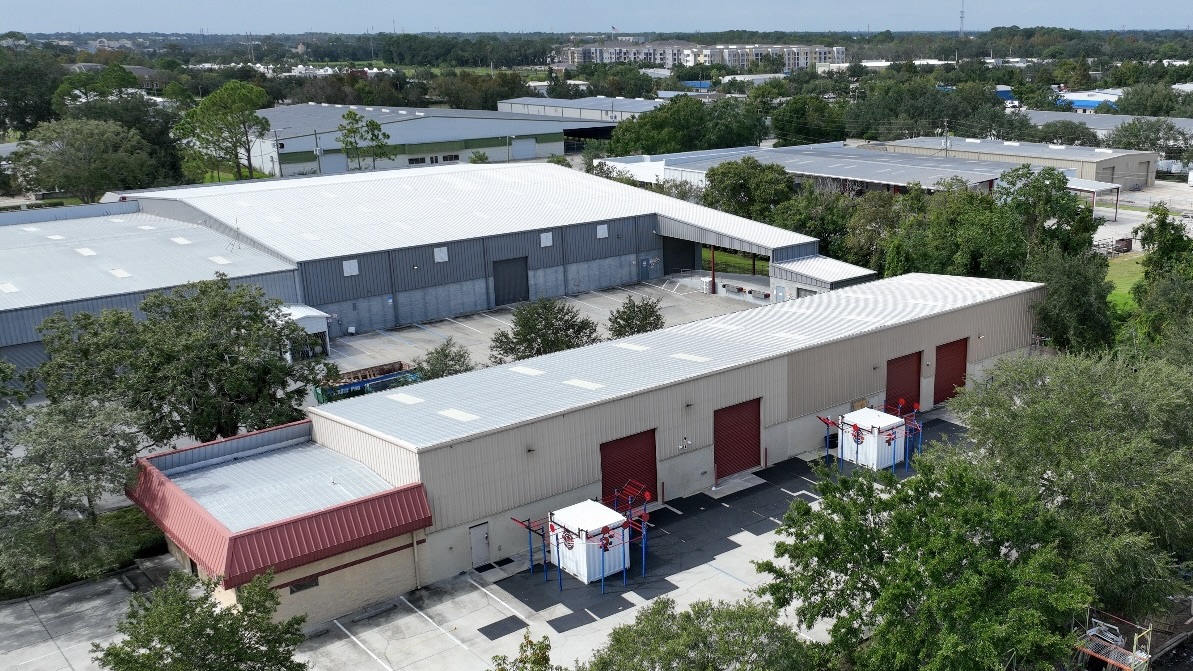
Huntsville's commercial inventory is built for this approach. The sprawling low-slope roofs across the Redstone Arsenal contractor base, the research and technology buildings around Cummings Research Park, and the deep retail rooftops along University Drive and Memorial Parkway are exactly the kind of large, awkward-to-walk surfaces where aerial coverage earns its keep in both completeness and speed. A roof that would take a crew all afternoon to cross on foot gets documented end to end in a single structured flight.
The most valuable thing a thermal flight does is locate wet insulation that is completely invisible from the surface. The physics behind it is simple. Insulation that is saturated with water holds more thermal mass than the dry board around it, so after a sunny day it gives up that stored heat more slowly. We fly during the cool-down window after sunset, when that difference is sharpest, and the saturated zones read warmer in the infrared image as discrete, mappable shapes. We then confirm those zones with a small number of test cuts, so what we hand back is verified moisture rather than a guess off a thermal anomaly that could just as easily be a reflection or a rooftop heat source.
That single finding drives the most expensive decision an owner faces. If the wet area is small and contained, the roof is a candidate for a targeted repair or a recover. If the moisture is spread across a large share of the field, the saturated insulation has almost certainly been quietly bleeding off R-value and corroding the deck beneath it, and the honest answer becomes replacement. A thermal moisture map turns that conversation from one person's opinion into shared evidence, and it keeps owners from spending good money to recover over insulation that is already soaked through.
We operate under FAA Part 107, the rule that governs commercial small-drone flight, and our pilots hold the remote pilot certificate it requires. Huntsville adds a genuine airspace wrinkle that not every market has. The Redstone Arsenal and the controlled airspace surrounding it, combined with proximity to Huntsville International Airport off Glenn Hearn Boulevard, mean a number of commercial roofs sit beneath controlled airspace where a flight needs LAANC authorization before we ever launch. We check the airspace for every individual address, pull the authorization wherever one is required, and keep the aircraft within visual line of sight for the duration of the flight.
The flight itself is only part of operating safely on a working commercial site. We set up a controlled launch and recovery area away from traffic, brief the property's staff before we put anything in the air, and route the flight to avoid occupied parking and pedestrian paths. The crucial point for an owner is that nobody has to climb a ladder, step onto a roof access hatch, or traverse a fragile membrane to get the assessment done. The risk that comes with putting people on a roof is taken off the table entirely.
Every flight produces a GPS-tagged photographic record, so each defect is tied to a specific location on the roof rather than buried in a vague written description. That matters most after the hail and straight-line wind events the Tennessee Valley sees through spring. We document impact patterns, displaced or torn membrane, and damaged rooftop equipment in the format commercial adjusters expect, and because the imagery is captured fast we can build a claim package while the damage is still fresh and undisputed. Ahead of a reroof, the same flight confirms true roof area, locates every penetration and curb, and feeds an accurate specification, which cuts the change orders and field questions that come from drawings built on assumptions instead of measured conditions.
A drone covers the entire roof systematically from a consistent altitude and produces a complete photographic record with no foot traffic on the membrane. It is most valuable on large low-slope roofs, where a walkover takes hours and still misses ponding areas. Thermal moisture mapping in particular is not practical on foot at scale; it needs the uniform coverage only a flight can give.
Yes, under the right conditions. We fly during the cool-down after sunset, when wet insulation releases its stored heat more slowly than the dry board around it and reads warmer in the infrared image as a defined zone. We confirm every flagged area with test cuts, so the report reflects verified moisture rather than an unconfirmed thermal anomaly.
We fly under FAA Part 107 with certified remote pilots. Many Huntsville commercial sites sit beneath controlled airspace because of the Redstone Arsenal and Huntsville International, so we check the airspace for your address and obtain LAANC authorization before launch wherever it is required, keeping the aircraft within visual line of sight throughout.
Large flat commercial roofs: distribution and industrial buildings, retail centers, office complexes, and multi-building campuses. For a small or steeply sloped roof, a manual look is fast and complete. For any commercial roof over roughly 10,000 square feet that needs a full condition assessment, the flight is the more thorough and efficient route.
Routine flights are usually schedulable within a few business days, weather and airspace permitting. Post-storm inspections for insurance documentation get priority and can often happen within a day or two of a significant weather event. We confirm the exact turnaround when you call.
Membrane seams, fasteners, curbs, penetrations, edge metal, and drainage paths are reviewed before any repair scope is recommended.
Work windows, tenant access, equipment protection, and safety needs are considered so roof work fits the building’s operating rhythm.
Photos, notes, measurements, and priorities are organized into a roof plan that helps ownership choose the next move with less guesswork.