Roof condition
Membrane seams, fasteners, curbs, penetrations, edge metal, and drainage paths are reviewed before any repair scope is recommended.
 Request Roof Walk
Commercial Roofers of Huntsville handles DST roofing services with a documented roof walk, photo notes, repair priorities, and a clear path for maintenance, recovery, or replacement.
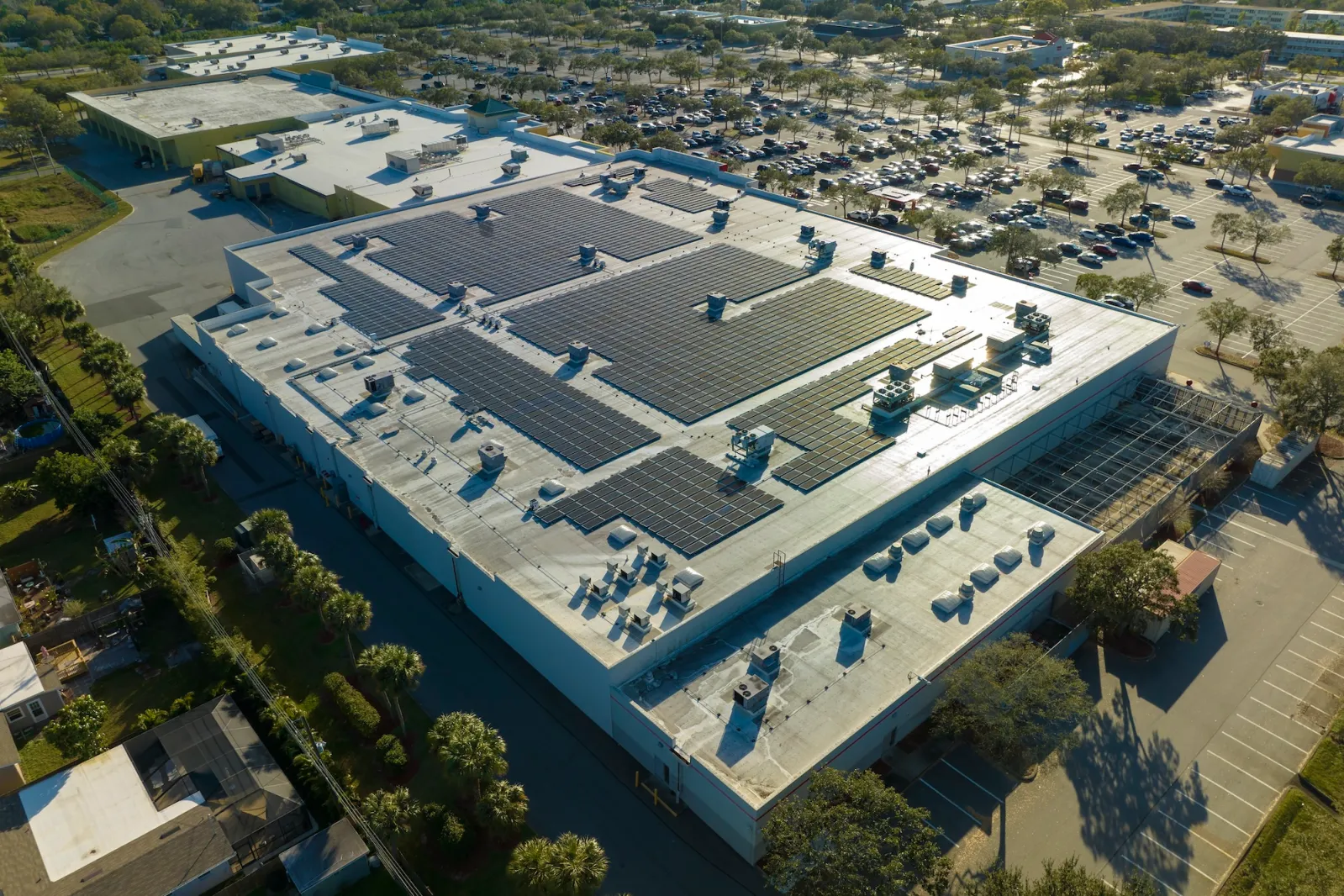
The roof below Commercial Real Estate and REITs carries tenants, freight, staff, equipment, research space, and business interruption risk. We start Commercial Real Estate and REITs by asking for roof age, leak locations, prior reports, access rules, tenant limits, and the event that made the roof question urgent. Commercial Real Estate and REITs is tied to portfolio owners comparing roof condition, risk, and capital timing, so the scope has to be written for the buyer's operating risk rather than for a generic product list. Our first job on Commercial Real Estate and REITs is to separate emergency protection from capital planning so a wet ceiling tile does not turn into a rushed replacement and an aging roof does not get patched without checking deck, insulation, drainage, and edge conditions.
Delaware Statutory Trust sponsors acquiring commercial properties in Huntsville, Alabama are entering one of the fastest-growing metros in the Southeast, a market whose defense and aerospace economic base has created a remarkably durable commercial real estate demand profile. Madison County's combination of federal defense spending, Redstone Arsenal employment, and a growing technology sector has attracted increasing 1031 exchange interest in industrial, NNN retail, and medical office product. Huntsville's ascent to a tier-two market with tier-one fundamentals has made it a compelling replacement property destination for exchangers from coastal markets seeking higher yields without sacrificing tenant quality. The roofing due diligence requirements in this market, however, involve specific considerations that sponsors from both northern and coastal markets are often not positioned to evaluate without local expertise.
Alabama's climate occupies a risk zone that combines meaningful tornado and severe weather exposure with enough winter temperature variation to create periodic freeze-thaw stress on commercial roofing systems, a combination that is more demanding than either risk alone. Madison County sits in the northern Alabama severe weather corridor, where spring and fall convective systems regularly produce large hail, wind damage, and tornado risk. At the same time, Huntsville's elevation and northern Alabama latitude mean the market experiences winter cold events that create ice dam potential and freeze-thaw cycling at parapet flashings and seam terminations. A due diligence inspection that addresses both the severe weather and the winter climate components gives sponsors a complete picture of the risks a Huntsville commercial roof faces across a ten-year hold period.
Roof condition reports for 1031 due diligence in Huntsville should document existing membrane condition and any prior storm damage repair history, evaluate drainage performance relative to Alabama's intense summer rainfall events, assess parapet and edge flashing integrity in light of the freeze-thaw exposure that northern Alabama winters create, and provide a remaining useful life estimate that reflects both calendar age and the accumulated weather stress the system has experienced. For industrial properties supporting defense or manufacturing tenants, the inspection should also address any specialized penetrations, exhaust systems, or rooftop equipment that affects membrane performance and maintenance requirements.
The passive DST ownership structure creates specific operational requirements in Huntsville's severe weather environment. When a spring tornado warning prompts a shelter-in-place event and the subsequent all-clear reveals commercial roof damage across Madison County, the property manager needs to act immediately. Insurance claim documentation must happen while physical evidence is fresh and before other repair activity obscures the damage pattern. The pre-established roofing contractor relationship means the contractor is on site within hours, not days, documenting damage, providing temporary emergency protection, and generating the written report that anchors the insurance claim.
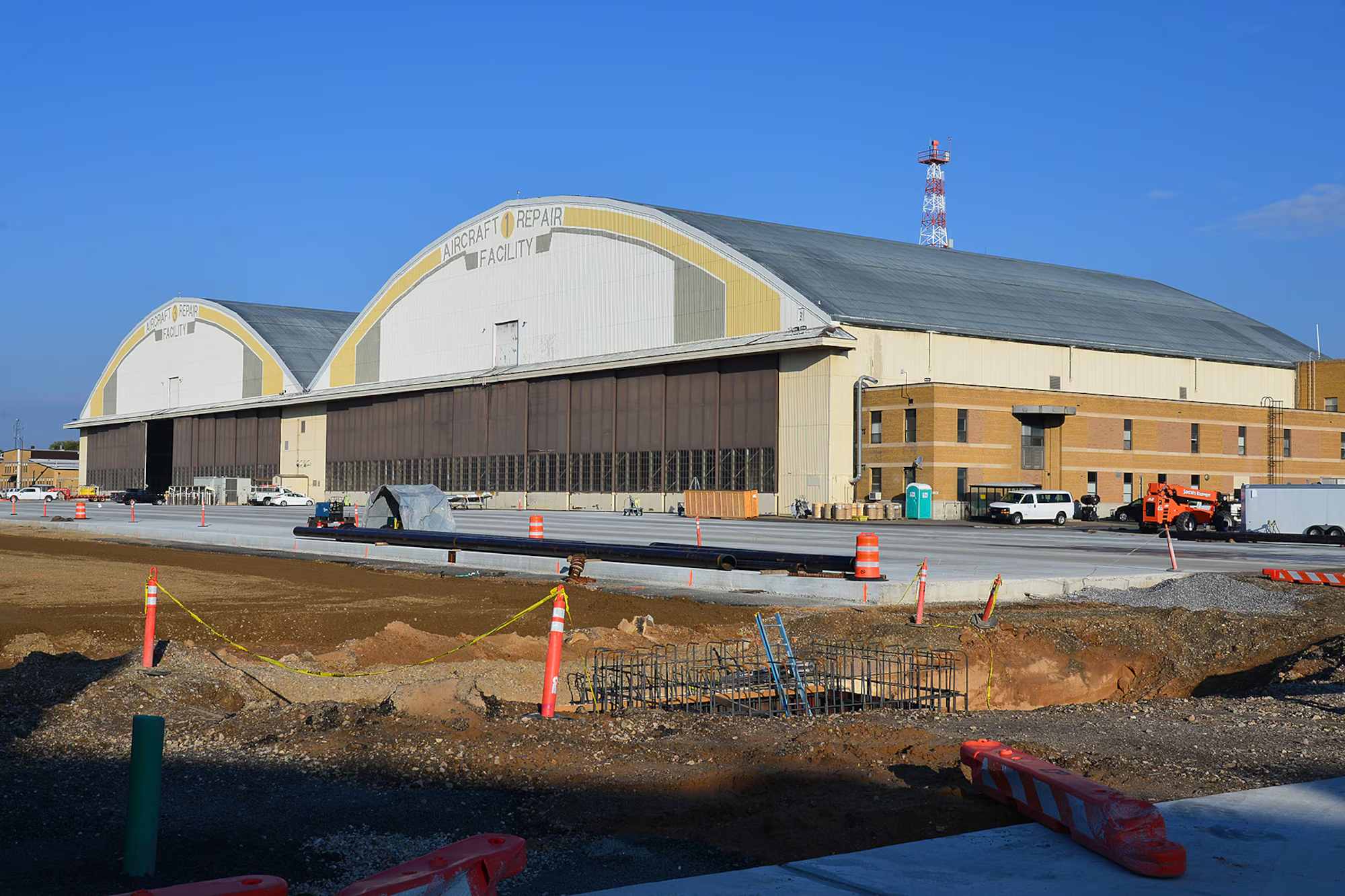
Huntsville DST acquisitions reflect the market's composition: industrial and manufacturing support facilities near Redstone Arsenal and in Cummings Research Park, NNN retail along University Drive and US-72, and medical office product near Huntsville Hospital and the growing healthcare corridor. Industrial properties in the defense sector sometimes carry specialized roof requirements, secure facility requirements, specialized penetration restrictions, or inspection documentation standards that are different from standard commercial practice. A contractor with prior work experience on Madison County commercial industrial properties understands these nuances from first contact.
Reserve adequacy for Huntsville DST offerings should reflect Alabama construction costs, which are generally below national averages but have risen with the region's growth and the increased demand for construction labor that Huntsville's expansion has created. The reserve schedule should include both the amortized replacement cost based on remaining useful life and a contingency for severe weather events, which in Madison County occur with enough frequency that planning for at least one significant storm-related repair during a ten-year hold period is a reasonable actuarial assumption. Sponsors who build this contingency into the offering memorandum are better positioned to communicate transparently with investors if and when such an event occurs.
Hold period maintenance for a Huntsville DST property should include biannual inspections, spring and fall, timed to catch both post-winter damage and pre-storm-season preparation. The spring inspection should document any freeze-thaw damage from the winter and address any issues before the severe weather season peaks from March through May. The fall inspection should address any summer storm damage and prepare the roof for winter. Post-event assessments following any significant tornado or hail event should be conducted as soon as site access is safely available, with written findings retained for both insurance purposes and investor reporting.
Huntsville's trajectory as a defense and technology market suggests that the commercial real estate fundamentals supporting DST acquisitions here will remain durable through extended hold periods. Sponsors who combine the market's favorable demand drivers with rigorous roofing due diligence, honest reserve modeling, and reliable local contractor relationships are positioned to deliver the stable distributions that their investors expect. In a market where Alabama weather can shift from pleasant spring conditions to severe storm damage in a matter of hours, the operational preparation made at acquisition is what determines how smoothly those hold period weather events are absorbed.
Membrane seams, fasteners, curbs, penetrations, edge metal, and drainage paths are reviewed before any repair scope is recommended.
Work windows, tenant access, equipment protection, and safety needs are considered so roof work fits the building’s operating rhythm.
Photos, notes, measurements, and priorities are organized into a roof plan that helps ownership choose the next move with less guesswork.