Roof-side documentation
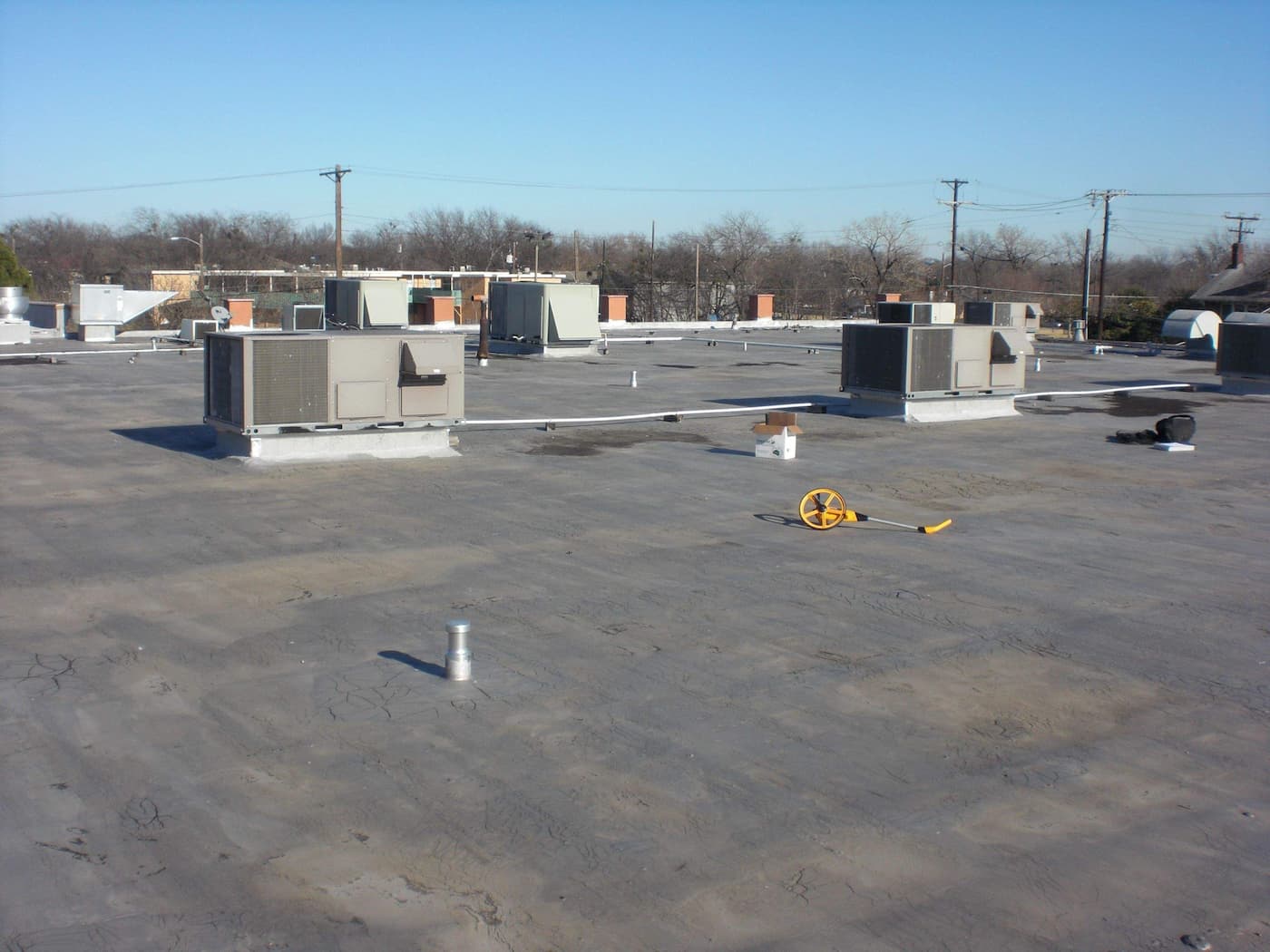
Photos, measurements, and moisture readings recorded the way a claims file needs them, tied to the specific roof system involved.
 Request Roof Walk
When a Huntsville commercial roof is damaged by wind, hail, or a storm event, the claim moves faster when the roof-side evidence is complete before the adjuster shows up. We inspect, document, and put the full repair scope in writing.
A property insurance claim on a commercial roof turns on evidence, not opinion. The carrier wants a specific cause of loss, a dated record of the damage, and a scope that matches what actually happened to the roof. We're your roofing contractor, not a public adjuster, our job is to walk the roof, photograph and measure what we find, and write a damage assessment that holds up when the carrier's adjuster reviews it, not to file the claim or negotiate the settlement on the owner's behalf.
Before we get on the roof, we ask for the policy's reported cause of loss, the date of the event, any prior roof reports, and access requirements for the building. A downtown office roof, a Cummings Research Park tenant building, and a Jetplex distribution roof all have different access rules, and a claim file that ignores those details reads as generic to an adjuster who has seen hundreds of them.
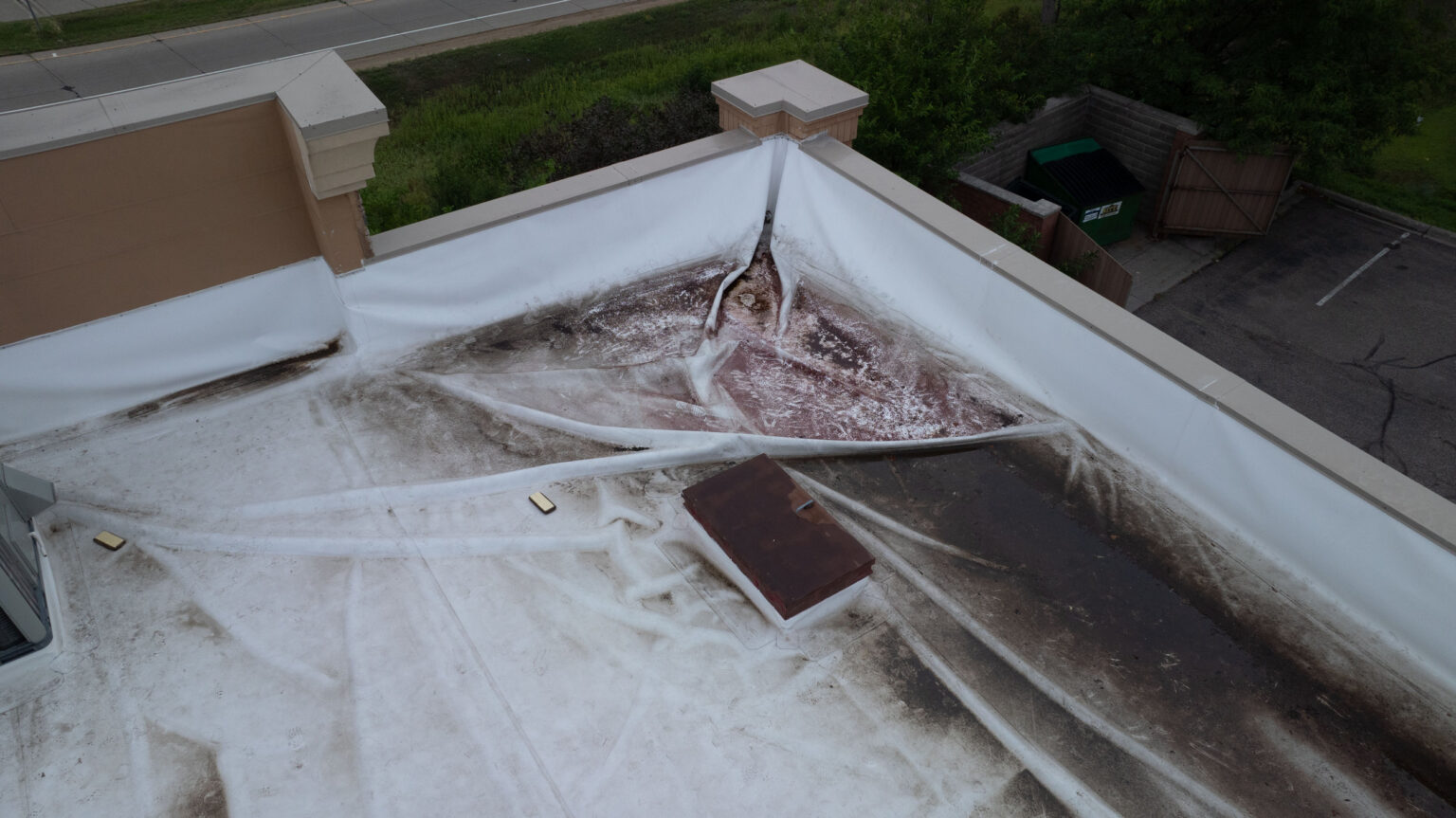
Most commercial claims involve a carrier-side adjuster who walks the roof once, often on a tight schedule, and forms a scope from what's visible that day. We schedule our inspection to align with theirs when possible, so someone who knows the roof's membrane, seams, drains, and prior repair history is standing there pointing out what a first-time visitor might miss: bruised insulation under a membrane, a displaced panel behind a rooftop unit, or granule loss along a parapet that's easy to walk past.
We keep our role narrow and specific on that walk. We point to conditions, explain what we measured, and answer technical questions about the roof system. We don't argue the claim's value or represent the owner's position to the carrier, that's the owner's call to make, with a public adjuster or attorney if they choose one.
Commercial roofs get underpaid when the accepted scope misses real cost drivers: code-required upgrades triggered by the repair, insulation that has to be replaced along with the membrane, drain or edge-metal work needed to match the new material to the old, or a section of roof the first inspection didn't reach. Our documentation itemizes those items with photos and measurements so nothing legitimate gets left out of the estimate the owner brings to their carrier.
That's the extent of what "complete scope" means here, every real repair item accounted for and backed by evidence, not an inflated number. We don't promise a payout amount or a claim outcome; we document what the roof needs so the owner and their adjuster are working from an accurate picture.
A denial or a low settlement is often a documentation gap rather than a coverage issue, damage attributed to age instead of a storm event, a scope that stopped at the visible surface, or a report that didn't address drainage and insulation condition. When that happens, we can re-inspect, add moisture readings or additional photos, and put a more complete record in writing for the owner to take back to their carrier or public adjuster.
Huntsville's roof stock spans research-park labs, aerospace and defense contractor buildings near Redstone, downtown offices along Washington Street, and distribution buildings out toward Jetplex and the airport. A claim file has to speak to the actual roof system on that building, TPO, EPDM, modified bitumen, or metal, not a generic damage description.
Most commercial property policies cover roof damage tied to a specific event, wind, hail, a fallen tree, once the cause and extent are documented. Coverage depends on the policy language, the roof's pre-event condition, and whether the damage is storm-related or ordinary wear.
The owner reports the loss to their carrier, a roof walk documents the damage, the carrier sends an adjuster to inspect, and a repair scope is agreed on or disputed. We support the roof-side steps, inspection, photo and measurement records, and meeting the adjuster on the roof.
A denial can follow from a scope the carrier considered too narrow in cause, damage attributed to age rather than a storm event, or missing documentation. We can re-inspect and put additional roof evidence in writing for the owner to bring back to the carrier or a public adjuster.
That depends on the extent of the damage, the roof's remaining service life, and whether repairs can be matched to the existing membrane. We document both options with roof evidence so the owner and adjuster can compare them against the same facts.
No. We're a roofing contractor, not a public adjuster, we inspect, document, and produce a defensible repair scope. Filing the claim and negotiating the settlement stays with the owner, their carrier, and any public adjuster or attorney they choose to involve.
Photos, measurements, and moisture readings recorded the way a claims file needs them, tied to the specific roof system involved.
We meet the carrier's adjuster on the roof and point to the conditions and history a first-time visitor could miss.
Drains, edge metal, insulation, and code-triggered items get itemized so the estimate reflects the full extent of the damage.