Pre-walk intake
Address, roof age, cause of loss, and access rules gathered before scheduling so the inspection is planned, not improvised.
 Request Roof Walk
From the first call to the final scope, we keep the roof-side steps of an insurance claim organized: a documented roof walk, a coordinated adjuster visit, and a repair scope written from evidence, not estimates.
A coordinated claim starts before anyone gets on the roof. We ask for the building address, roof age if it's known, the reported cause and date of loss, access rules, and any tenant restrictions that affect scheduling. If a prior roof report or manufacturer warranty exists, that comes into the file too, since it shapes what we expect to find and helps separate storm damage from pre-existing conditions.
Huntsville buildings vary enough that this step matters: a downtown office with street-level staging, a secure research-park tenant space near Redstone, and a Jetplex-area distribution building all require different access planning before an inspection can even be scheduled.
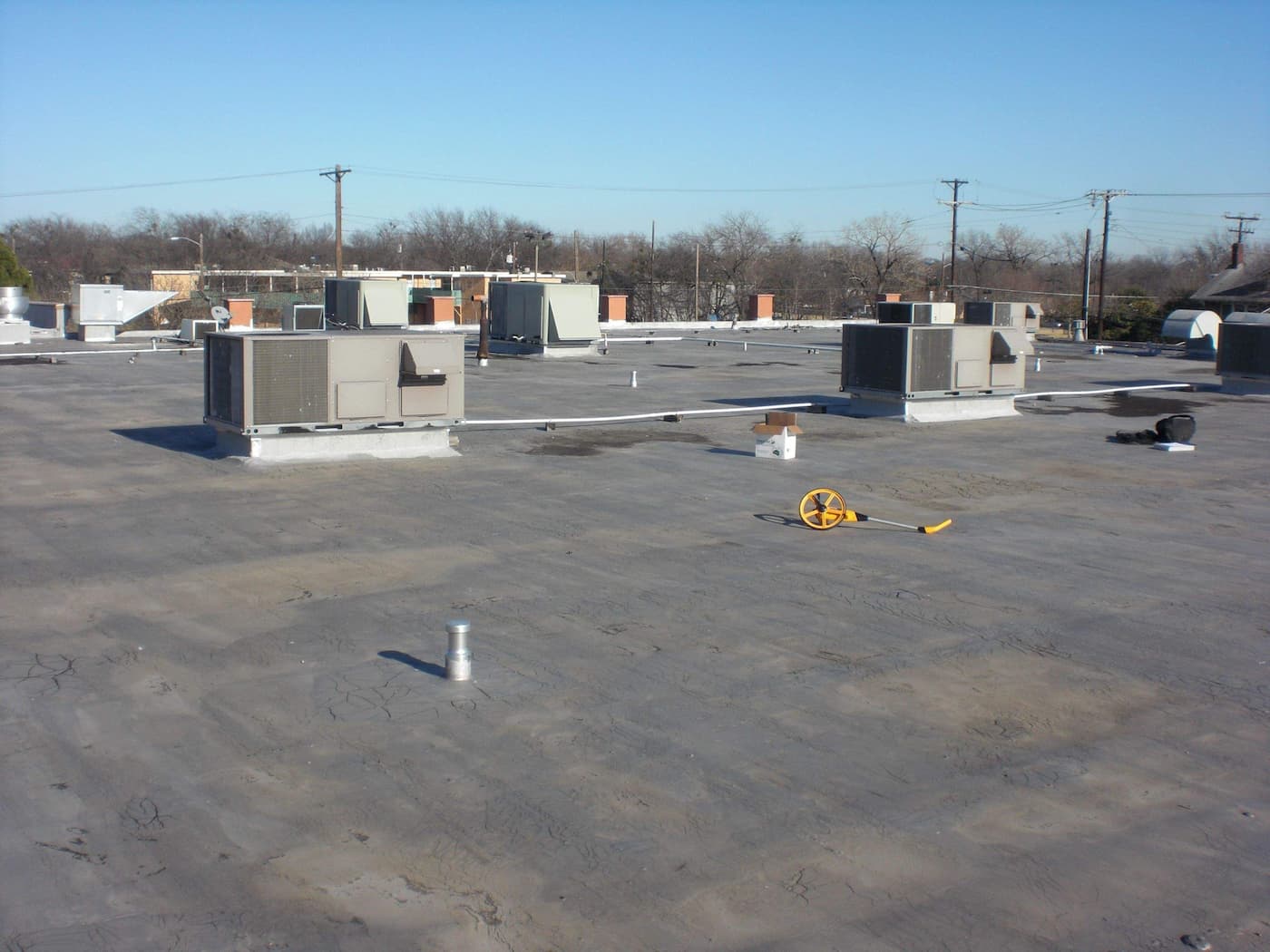
Our inspection covers membrane condition, seams and laps, edge metal and coping, curbs and penetrations, drains and scuppers, and any interior evidence of leaking. Where the reported cause is wind, hail, or storm debris, we document the specific marks tied to that event separately from unrelated wear, so the claim file doesn't get muddied with issues that predate the loss.
Every finding gets photographed, measured, and dated. Trapped moisture, loose edge metal, backed-out fasteners, or displaced panels go into the record as we find them, with enough detail that someone who never walked the roof can follow what happened and where.
When scheduling allows, we time our inspection to line up with the carrier's adjuster visit. Having someone on the roof who already knows its construction, prior repairs, and the specific damage pattern helps the adjuster's walk go faster and reduces the chance that a real repair item gets missed because it wasn't obvious on a first look.
Our role on that visit is technical, not representational: we answer questions about the roof system, point to documented conditions, and explain what a repair would involve. We're your roofing contractor, not a public adjuster — we don't argue claim value or negotiate the settlement, and we won't promise a payout amount or guarantee the claim's outcome.
Once the inspection is complete, we build a repair scope that itemizes what the roof actually needs: membrane repair or replacement, insulation affected by moisture, drain and edge-metal work, and any code-required upgrades the repair would trigger. That scope is meant to give the owner and their adjuster the same accurate starting point, so review conversations focus on the roof's real condition instead of a vague estimate.
If emergency protection is needed before the full scope is finalized — an open seam, exposed insulation, active water intrusion — we document the pre-repair condition first and then install tarp or dry-in protection so the building stays protected without losing the evidence the claim depends on.
Once a scope is agreed on, we move into the repair, restoration, recover, or replacement work itself, using the same documentation as the baseline for what gets done. If a claim comes back underpaid or denied, we can revisit the roof, add further evidence, and put an updated report in writing for the owner to bring back to their carrier or public adjuster.
The building address, roof age if known, the reported cause and date of loss, access instructions, tenant restrictions, and any prior roof reports. That lets us plan the inspection around the actual event instead of a generic checklist.
Yes. When the timing works, we schedule our roof walk to align with the carrier's adjuster so someone familiar with the roof's history and construction is on site to point out conditions during that visit.
No. We're a roofing contractor, not a public adjuster. We inspect, document, and produce a repair scope grounded in what we found on the roof. Filing and negotiating the claim stays with the owner, their carrier, and any public adjuster they choose to bring in.
We document the damage before covering it, then install emergency tarp or dry-in protection if water intrusion is active. The permanent repair scope gets built once the roof is stable and fully inspected.
Address, roof age, cause of loss, and access rules gathered before scheduling so the inspection is planned, not improvised.
Our inspection lines up with the carrier's adjuster when scheduling allows, with documented conditions ready to point to.
Membrane, insulation, drains, edge metal, and code items are written into a scope tied directly to the roof evidence.